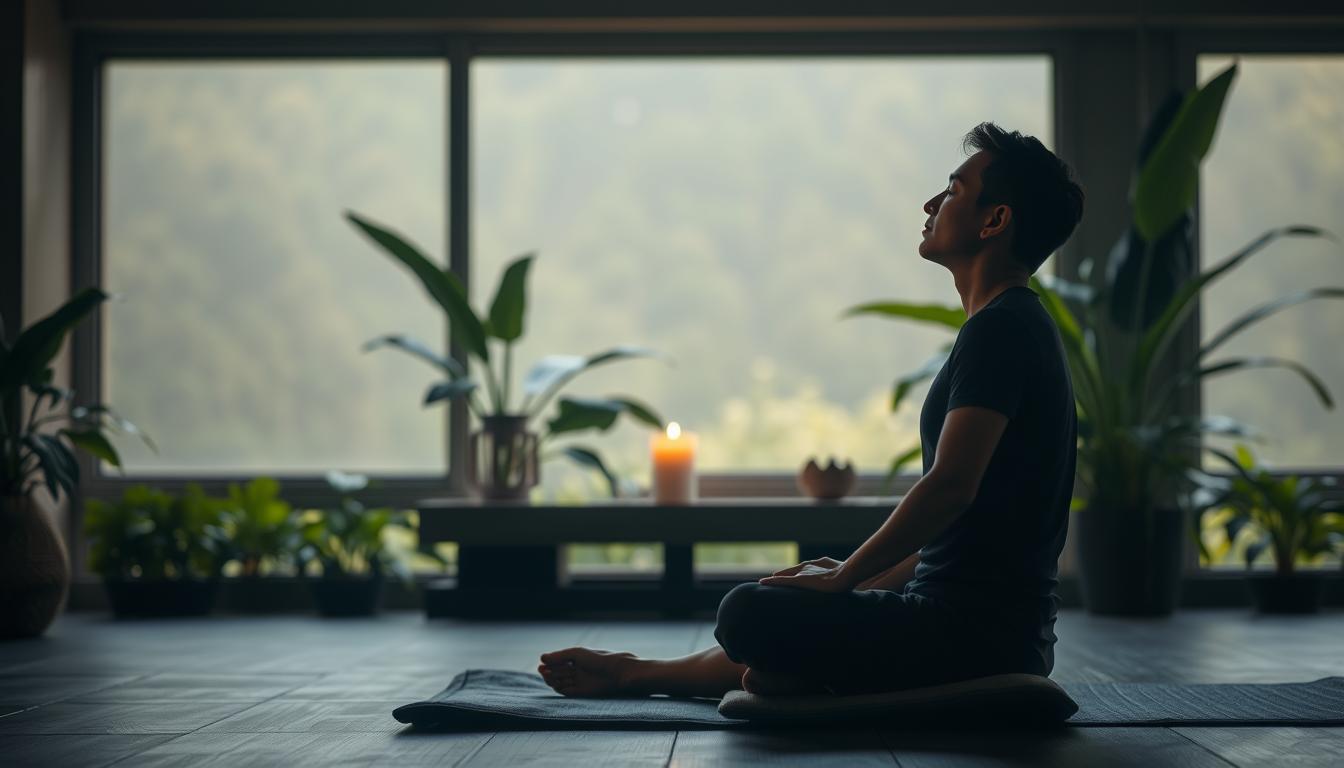
Are you tired of feeling overwhelmed and stressed? Can a simple practice really bring calm to a chaotic life? Meditation might be the answer. In today’s fast-paced world, finding inner peace is more valuable than ever.
Meditation is a powerful tool that helps you cultivate a sense of calm and clarity. This beginner’s guide will walk you through the basics of meditation techniques and provide you with a foundation to start your journey towards a more peaceful you.
Key Takeaways
Table of Contents
- Discover the benefits of meditation for inner peace
- Learn simple meditation techniques for beginners
- Understand how to start a meditation practice
- Explore the importance of mindfulness in meditation
- Find tips for maintaining a consistent meditation routine
Understanding the Foundations of Meditation
At its heart, meditation is a simple yet profound practice aimed at cultivating mindfulness. It’s a technique that helps individuals develop a deeper understanding of themselves, leading to a more harmonious and balanced life.
What Meditation Really Means
Meditation is often misunderstood as a complex or religious practice. However, at its core, it’s about focusing your attention and becoming more aware of the present moment. This practice is not about achieving a specific state but rather about observing your thoughts and feelings without judgment.
The Science Behind Meditation and Inner Peace
Research has shown that regular meditation can lead to a decrease in stress hormones like cortisol, contributing to a sense of calming the mind and inner peace. Studies using MRI scans have found that meditation can alter the brain’s structure, enhancing areas related to emotional regulation and memory.
Setting Realistic Expectations as a Beginner
As a beginner, it’s essential to set realistic goals for your meditation practice. Start with short sessions, even just a few minutes a day, and gradually increase the duration as you become more comfortable with the practice. Remember, the goal is not to achieve a specific state but to cultivate awareness and patience.
How to Meditate for Inner Peace: Essential Techniques
The path to inner peace through meditation involves several key elements, including creating a conducive environment, adopting the right posture, and practicing specific meditation techniques. By mastering these elements, individuals can enhance their meditation practice and move closer to achieving a state of inner peace.
Creating Your Ideal Meditation Space
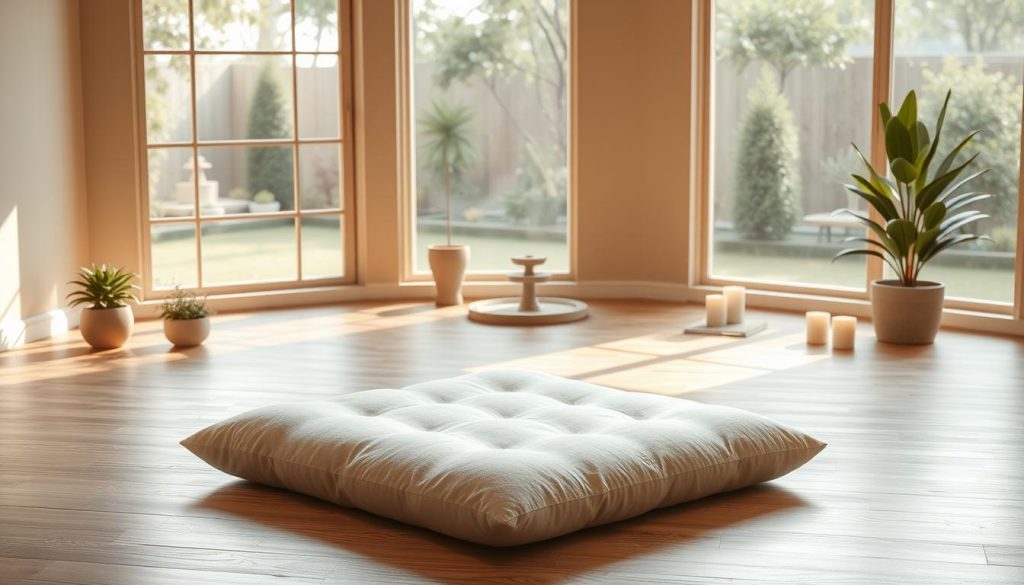
Creating a dedicated meditation space can significantly enhance your practice. This space should be quiet, comfortable, and free from distractions. Consider using calming colors, soft lighting, and comfortable seating to create an environment that fosters relaxation and focus.
Finding the Right Posture for Comfort and Focus
Maintaining the right posture during meditation is crucial for comfort and focus. You can sit on a chair, cushion on the floor, or even lie down, depending on what feels most comfortable for you. The key is to keep your back straight and your body relaxed, allowing you to breathe deeply and maintain focus.
Breath Awareness Meditation for Beginners
Breath awareness meditation is a simple yet powerful technique for beginners. It involves focusing your attention on your breath, observing its pattern, and letting go of distracting thoughts. Start by taking slow, deep breaths, and gradually shift your focus to the sensation of the breath moving in and out of the body.
Body Scan Technique for Physical Relaxation
The body scan technique involves lying down or sitting comfortably and bringing your attention to different parts of your body, starting from your toes and moving up to the top of your head. As you focus on each area, release any tension or discomfort, allowing your body to relax further with each breath.
Loving-Kindness Meditation for Emotional Peace
Loving-kindness meditation, also known as Metta meditation, involves cultivating feelings of love, compassion, and kindness towards yourself and others. Start by directing kind thoughts towards yourself, then gradually extend these feelings to others, including those you may have difficulty with, to cultivate emotional peace and understanding.
Guided Visualization for Calming the Mind
Guided visualization involves using your imagination to create a mental image or scenario that promotes relaxation and calmness. Listen to guided recordings or use your own imagination to visualize a peaceful setting, focusing on the sensory details to immerse yourself in the experience and calm your mind.
By incorporating these techniques into your meditation practice, you can enhance your ability to achieve inner peace and improve your overall well-being. Regular practice and patience are key to experiencing the full benefits of meditation.
The Transformative Benefits of Regular Meditation
Incorporating meditation into your daily routine can result in numerous benefits that improve mental clarity, emotional stability, and overall peace of mind. Regular meditation practice has been shown to have a positive impact on both mental and emotional well-being.
Reducing Stress and Anxiety
Meditation is renowned for its ability to reduce stress and anxiety. By focusing on the present moment, individuals can calm their minds and alleviate the pressures of daily life.
Improving Mental Clarity and Focus
Regular meditation practice improves mental clarity and focus by training the mind to concentrate on a single point, thereby enhancing cognitive function.
Enhancing Emotional Regulation
Meditation also plays a crucial role in emotional regulation. It helps individuals become more aware of their emotions, making it easier to manage and respond to challenging situations.
Cultivating Long-term Inner Peace
Consistent meditation practice can lead to long-term inner peace. By fostering a deeper understanding of oneself and promoting a sense of calm, meditation contributes to a more peaceful and balanced life.
| Benefits | Description |
|---|---|
| Reducing Stress and Anxiety | Calms the mind and alleviates daily pressures |
| Improving Mental Clarity and Focus | Enhances cognitive function through concentrated training |
| Enhancing Emotional Regulation | Increases awareness and management of emotions |
| Cultivating Long-term Inner Peace | Fosters a deeper self-understanding and promotes calm |
Overcoming Common Meditation Challenges
The path to inner peace through spiritual meditation is not always straightforward; several challenges can arise. As you practice, you may encounter a wandering mind, difficulty finding time, physical discomfort, slow progress, or emotional resistance.
Taming a Wandering Mind
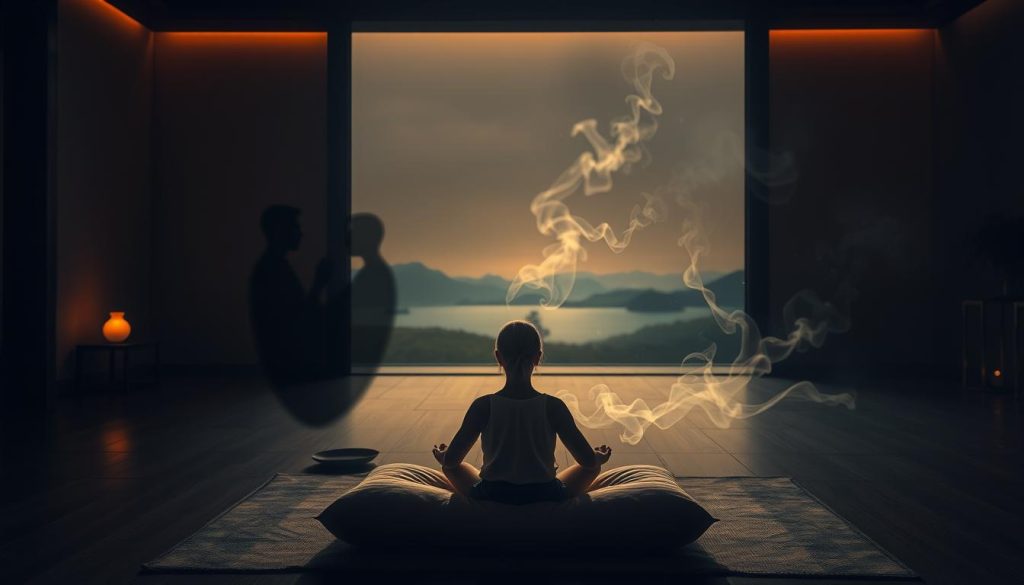
One of the most common challenges is a wandering mind. It’s easy to get frustrated when your mind drifts away from your chosen meditation focus. Gently acknowledge the distraction and refocus your attention on your breath or mantra. With consistent practice, you’ll improve your ability to maintain focus.
Finding Time in Your Busy Schedule
Many people struggle to find time for spiritual meditation in their busy lives. Start by committing to a short daily practice, even just a few minutes. As you experience the benefits, you’ll find it easier to prioritize your meditation time.
Managing Physical Discomfort During Practice
Physical discomfort can be a significant obstacle. Experiment with different postures and seating options to find what works best for you. Using a cushion or chair can help maintain a comfortable position during your meditation practice.
Staying Consistent When Progress Seems Slow
It’s normal to feel discouraged if progress seems slow. Celebrate small victories and remember that consistency is key. Regular spiritual meditation practice will lead to noticeable improvements over time.
Working Through Emotional Resistance
Sometimes, meditation can uncover emotional resistance. Approach these feelings with kindness and compassion. Allow yourself to process your emotions, and consider seeking guidance from a meditation teacher or counselor if needed.
Conclusion: Nurturing Your Meditation Journey
As you embark on your meditation journey, remember that cultivating inner peace is a gradual process. To meditate effectively, it’s essential to be patient and persistent in your practice. By doing so, you’ll be better equipped to handle life’s challenges and find a deeper sense of calm.
To truly benefit from meditation, it’s crucial to understand how to meditate for inner peace. This involves creating a conducive environment, adopting a comfortable posture, and focusing on your breath or a guided visualization. Regular practice will help you develop greater self-awareness and emotional regulation.
As you continue on your path, you may encounter obstacles, but with persistence and the right techniques, you can overcome them. By incorporating meditation into your daily routine, you’ll be taking a significant step towards achieving inner peace and improving your overall well-being.
By embracing meditation as a lifelong practice, you’ll be nurturing a journey that fosters personal growth, calmness, and clarity. Start your meditation practice today and discover the transformative benefits it can bring to your life.
FAQ
What is the best time of day to meditate for inner peace?
The best time to meditate is early morning or before bed, as these times tend to be quieter and less hectic, allowing for a more focused practice. However, the most important thing is to choose a time that works for you and your schedule.
How long should I meditate for as a beginner?
As a beginner, it’s recommended to start with short sessions of 5-10 minutes and gradually increase the duration as you become more comfortable with the practice. You can also start with guided meditations to help you get started.
What is the difference between mindfulness and meditation?
Mindfulness is the practice of being present in the moment, while meditation is a specific technique used to cultivate mindfulness. Meditation involves focusing your attention on a specific object, thought, or activity to achieve a mentally clear and emotionally calm state.
Can I meditate if I have a busy or restless mind?
Yes, you can still meditate even with a busy or restless mind. In fact, meditation can help calm your mind and reduce mental chatter. Try using a guided meditation or focusing on your breath to help calm your mind.
How can I incorporate meditation into my daily routine?
You can incorporate meditation into your daily routine by setting aside a specific time and space for practice, using reminders or apps to stay on track, and starting small with short sessions. You can also try meditating at the same time every day to make it a habit.
What are some common meditation techniques for achieving inner peace?
Some common meditation techniques for achieving inner peace include breath awareness, body scan, loving-kindness meditation, and guided visualization. You can experiment with different techniques to find what works best for you.
Can meditation help with stress relief and anxiety?
Yes, meditation has been shown to be effective in reducing stress and anxiety by promoting relaxation, reducing cortisol levels, and improving emotional regulation. Regular meditation practice can help you feel more calm and centered.
How can I stay motivated to continue my meditation practice?
You can stay motivated to continue your meditation practice by setting realistic goals, tracking your progress, and finding a meditation community or buddy for support. You can also try new techniques or guided meditations to keep your practice fresh and engaging.