
Can a simple practice like meditation really transform your life? For many, the answer is yes. In today’s fast-paced world, finding calm and clarity is more valuable than ever.
Mindfulness meditation has gained popularity as a tool for reducing stress and increasing focus. But for those new to the practice, getting started can be daunting.
This guide is designed to introduce beginners to the basics of mindfulness meditation and its benefits. By understanding how to start this practice, you can begin your journey to a more mindful and peaceful life.
Key Takeaways
Table of Contents
- Understanding the basics of mindfulness meditation
- Learning how to start a mindfulness practice
- Discovering the benefits of mindfulness meditation for beginners
- Exploring tips for maintaining a consistent practice
- Finding resources for further learning and support
What is Mindfulness Meditation?
At its core, mindfulness meditation is about cultivating awareness of the present moment. This practice involves paying attention to thoughts, feelings, and sensations without judgment, allowing individuals to develop a deeper understanding of themselves.
The Core Principles of Mindfulness
Mindfulness is grounded in several core principles that guide its practice. Intention, attention, and attitude are fundamental elements that help practitioners cultivate mindfulness. The intention is to cultivate awareness, attention is focused on the present moment, and attitude is characterized by being non-judgmental and compassionate.
How Mindfulness Differs from Other Meditation Practices
Mindfulness meditation differs from other forms of meditation in its emphasis on the present moment. Unlike concentration meditation, which focuses on a specific object or mantra, mindfulness involves observing whatever arises in the present moment. This open awareness allows practitioners to develop a greater sense of flexibility and curiosity.
“Mindfulness is the awareness that arises through paying attention on purpose, in the present moment, and non-judgmentally to the current experience.” – Jon Kabat-Zinn
The History and Evolution of Mindfulness
Mindfulness has its roots in Buddhist traditions, dating back over 2,500 years. The practice was originally known as “sati” in Pali and “smrti” in Sanskrit, both meaning “to remember” or “to be aware.” Over time, mindfulness has evolved and been adapted into various forms, including mindfulness-based stress reduction (MBSR) and mindfulness-based cognitive therapy (MBCT).
| Key Components | Description |
|---|---|
| Intention | Cultivating awareness and clarity |
| Attention | Focusing on the present moment |
| Attitude | Being non-judgmental and compassionate |
The Science-Backed Benefits of Mindfulness Meditation
Research has shown that mindfulness meditation can have a significant positive effect on various aspects of health. The practice has been extensively studied, and the results are compelling.
Mental Health Benefits
Mindfulness meditation has been shown to have a positive impact on mental health. Regular practice can lead to a reduction in stress and anxiety, as well as improved management of depression.
Stress and Anxiety Reduction
Studies have found that mindfulness meditation can decrease the production of stress hormones like cortisol, leading to a decrease in anxiety levels. Regular mindfulness practice can help individuals better cope with stress.
Depression Management
Mindfulness meditation has been found to be effective in reducing symptoms of depression. By promoting a greater awareness of the present moment, individuals can better manage negative thought patterns. This can lead to improved mental health outcomes.
Physical Health Improvements
In addition to its mental health benefits, mindfulness meditation has also been shown to have a positive impact on physical health. Regular practice has been linked to lower blood pressure and improved sleep quality.
Lower Blood Pressure and Heart Rate
Regular mindfulness meditation has been found to lower blood pressure and heart rate, reducing the risk of heart disease. This can lead to improved overall cardiovascular health.
Improved Sleep Quality
Mindfulness meditation can also help improve sleep quality by promoting relaxation and reducing stress. Improved sleep is essential for overall health and well-being.
Enhanced Focus and Cognitive Function
Mindfulness meditation has been shown to improve focus and cognitive function. Regular practice can lead to improved attention and concentration, as well as enhanced problem-solving skills.
| Benefits | Description |
|---|---|
| Mental Health | Reduces stress and anxiety, improves depression management |
| Physical Health | Lowers blood pressure, improves sleep quality |
| Cognitive Function | Improves focus, attention, and problem-solving skills |

Essential Mindfulness Techniques for Beginners
As you start your mindfulness journey, it’s essential to learn various techniques that can help you cultivate a deeper sense of awareness. Mindfulness is not a one-size-fits-all practice; it encompasses a range of methods to suit different preferences and needs. Here, we’ll explore some fundamental techniques to get you started.
Breath Awareness Meditation
Breath awareness is a foundational mindfulness technique that involves focusing on your breath to anchor yourself in the present moment. This practice helps calm the mind and reduce stress.
Step-by-Step Instructions
- Find a comfortable seated position with your back straight.
- Close your eyes and take a few deep breaths.
- Focus your attention on the sensation of your breath entering and leaving your nostrils.
- When your mind wanders, gently bring it back to your breath without judgment.
Common Mistakes to Avoid
- Don’t try to control your breath; let it flow naturally.
- Avoid getting frustrated when your mind wanders; instead, patiently return your focus to your breath.
Body Scan Meditation
Body scan meditation involves paying attention to different parts of your body to release tension and promote relaxation. It’s an excellent way to connect with your physical self.
Guided Practice Instructions
- Lie down or sit comfortably, whichever feels more relaxing.
- Close your eyes and take a few deep breaths.
- Bring your attention to your toes, noticing any sensations without judgment.
- Gradually move your focus up through your body, releasing tension as you go.
Benefits of Regular Practice
- Reduces physical tension and stress.
- Enhances body awareness and relaxation.
Mindful Observation Practice
Mindful observation involves focusing your attention on an object, sound, or natural phenomenon to cultivate mindfulness. This practice can be done anywhere, making it highly versatile.
Using Objects for Focused Attention
Choose an object, like a candle flame or a flower, and observe it closely, noticing its colors, shapes, and textures. This helps to anchor your mind in the present.
Incorporating Nature into Your Practice
Nature provides a rich backdrop for mindfulness. Observe the sounds, sights, and smells around you. Paying attention to nature can enhance your sense of connection and calm.
Loving-Kindness Meditation
Loving-kindness meditation, also known as metta meditation, involves cultivating feelings of love, compassion, and kindness towards yourself and others. It’s a powerful way to foster a positive and empathetic mindset.
By incorporating these mindfulness techniques into your daily routine, you can experience a range of benefits, from reduced stress and anxiety to improved focus and overall well-being. Start with short sessions and gradually increase the duration as you become more comfortable with the practices.
Creating Your Daily Mindfulness Practice
To truly benefit from mindfulness, incorporating it into your daily routine is essential. Establishing a consistent practice can lead to greater calm, clarity, and overall well-being. In this section, we will explore practical steps to create a sustainable daily mindfulness practice.
Setting Up Your Meditation Space
Creating a dedicated space for meditation can significantly enhance your practice. Choose a quiet, comfortable spot where you can sit without distractions. Consider adding elements like candles, plants, or a meditation bench to create a peaceful atmosphere.
Finding the Right Time to Meditate
The best time to meditate is when it feels most comfortable for you. Many find that starting the day with mindfulness sets a positive tone, while others prefer meditating during their lunch break or before bed. Experiment to find what works best for your schedule.
Starting Small: 5-Minute Meditation Sessions
For mindfulness meditation for beginners, starting small is key. Begin with 5-minute sessions and gradually increase the duration as you become more comfortable with the practice. This approach helps build a consistent habit without feeling overwhelmed.
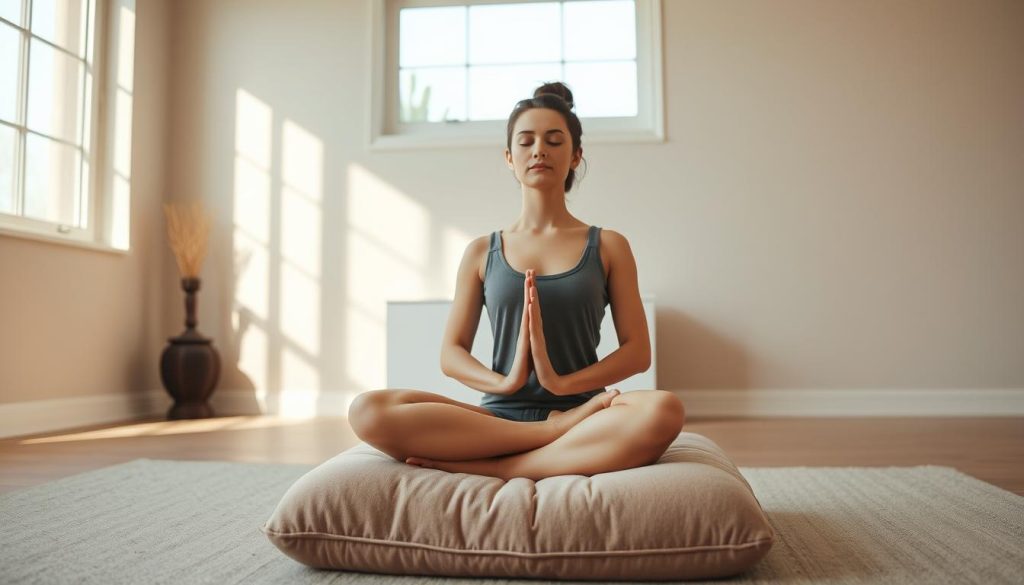
Using Apps and Guided Meditations
Leveraging technology can be a great way to support your mindfulness practice. There are numerous apps available that offer guided meditations tailored to various needs, from stress reduction to improved sleep. Some popular options include Headspace and Calm, which provide structured programs for beginners.
| App | Features | Cost |
|---|---|---|
| Headspace | Personalized meditation sessions, sleep stories | $12.99/month |
| Calm | Guided meditations, sleep stories, relaxing music | $14.99/month |
By incorporating these mindfulness practices into your daily routine, you can experience the profound benefits of mindfulness meditation. Remember, the key is consistency and patience.
Incorporating Mindfulness Into Everyday Life
Mindfulness can be seamlessly integrated into daily life, promoting a sense of calm and clarity. By incorporating mindfulness into everyday activities, individuals can enhance their overall well-being and reduce stress levels.
Mindful Eating Practices
Mindful eating involves paying full attention to the experience of eating and drinking. It’s about noticing the colors, smells, textures, and flavors of your food. To practice mindful eating, try to eat slowly, savoring each bite, and pause between bites to fully experience the sensations.
Tips for mindful eating:
- Turn off the TV and put away your phone while eating.
- Use all your senses to enjoy your meal.
- Chew slowly and thoroughly.
Mindful Walking and Movement
Mindful walking is a great way to bring mindfulness into your daily routine. Pay attention to the sensation of your feet touching the ground, the movement of your legs, and the rhythm of your breath. This practice can turn a simple walk into a meditative experience.
Mindfulness During Daily Activities
You can practice mindfulness during daily activities like showering, driving, or even doing the dishes. The key is to focus on the sensations and experiences of the moment, rather than letting your mind wander.
Mindful Communication with Others
Mindful communication involves being fully present and attentive when interacting with others. Listen carefully to what they are saying, and respond thoughtfully. This can improve your relationships and reduce misunderstandings.
By incorporating these mindfulness practices into your daily life, you can experience a significant reduction in stress and an improvement in overall well-being.
Conclusion: Your Journey to Mindful Living
As you conclude this beginner’s guide to mindfulness meditation, it’s clear that incorporating this practice into your daily life can have a profound impact on both mental and physical well-being. Understanding what is mindfulness meditation and experiencing its benefits firsthand can be a transformative journey.
By now, you’re equipped with essential mindfulness techniques, including breath awareness, body scan, and loving-kindness meditation. These practices, backed by science, offer numerous mindfulness meditation benefits, such as reduced stress, improved focus, and enhanced overall health.
As you continue on your path to mindful living, remember to be patient and compassionate with yourself. Start small, with 5-minute meditation sessions, and gradually increase your practice as you become more comfortable with the techniques. With consistent effort, you’ll find that mindfulness becomes an integral part of your daily life, leading to a more balanced, harmonious you.
FAQ
What is mindfulness meditation?
Mindfulness meditation is a practice that involves paying attention to the present moment in a non-judgmental way, cultivating awareness of one’s thoughts, feelings, and bodily sensations.
How do I start a mindfulness meditation practice?
To start a mindfulness meditation practice, begin by finding a quiet and comfortable space to sit, close your eyes, and focus on your breath, using guided meditations or apps to support you.
What are some common mindfulness techniques?
Common mindfulness techniques include breath awareness meditation, body scan meditation, mindful observation, and loving-kindness meditation, which can help you cultivate greater awareness and calm.
How can mindfulness meditation benefit my mental health?
Mindfulness meditation has been shown to reduce stress and anxiety, improve mood, and enhance emotional regulation, leading to better overall mental health and well-being.
Can mindfulness meditation help with physical health issues?
Yes, mindfulness meditation has been linked to various physical health benefits, including lower blood pressure, improved sleep quality, and a stronger immune system.
How often should I practice mindfulness meditation?
For optimal benefits, aim to practice mindfulness meditation daily, even if it’s just for a few minutes, to cultivate greater mindfulness and awareness in your daily life.
What are some tips for incorporating mindfulness into daily activities?
To incorporate mindfulness into daily activities, try practicing mindful eating, walking, and communication, paying attention to your thoughts, feelings, and bodily sensations in the present moment.
Can I use apps to support my mindfulness practice?
Yes, there are many apps available that offer guided meditations, mindfulness exercises, and tracking features to support your mindfulness practice and help you stay on track.
How long does it take to experience the benefits of mindfulness meditation?
The benefits of mindfulness meditation can be experienced in as little as a few weeks, with regular practice, although individual results may vary, and consistent practice is key to long-term benefits.